Smartbox 2 Deep-Dive
Physical dimensions, power budgets, thermal envelopes, and deployment architecture — everything your engineering and facilities teams need to evaluate and approve the Smartbox 2 chassis.
Key Hardware Capabilities
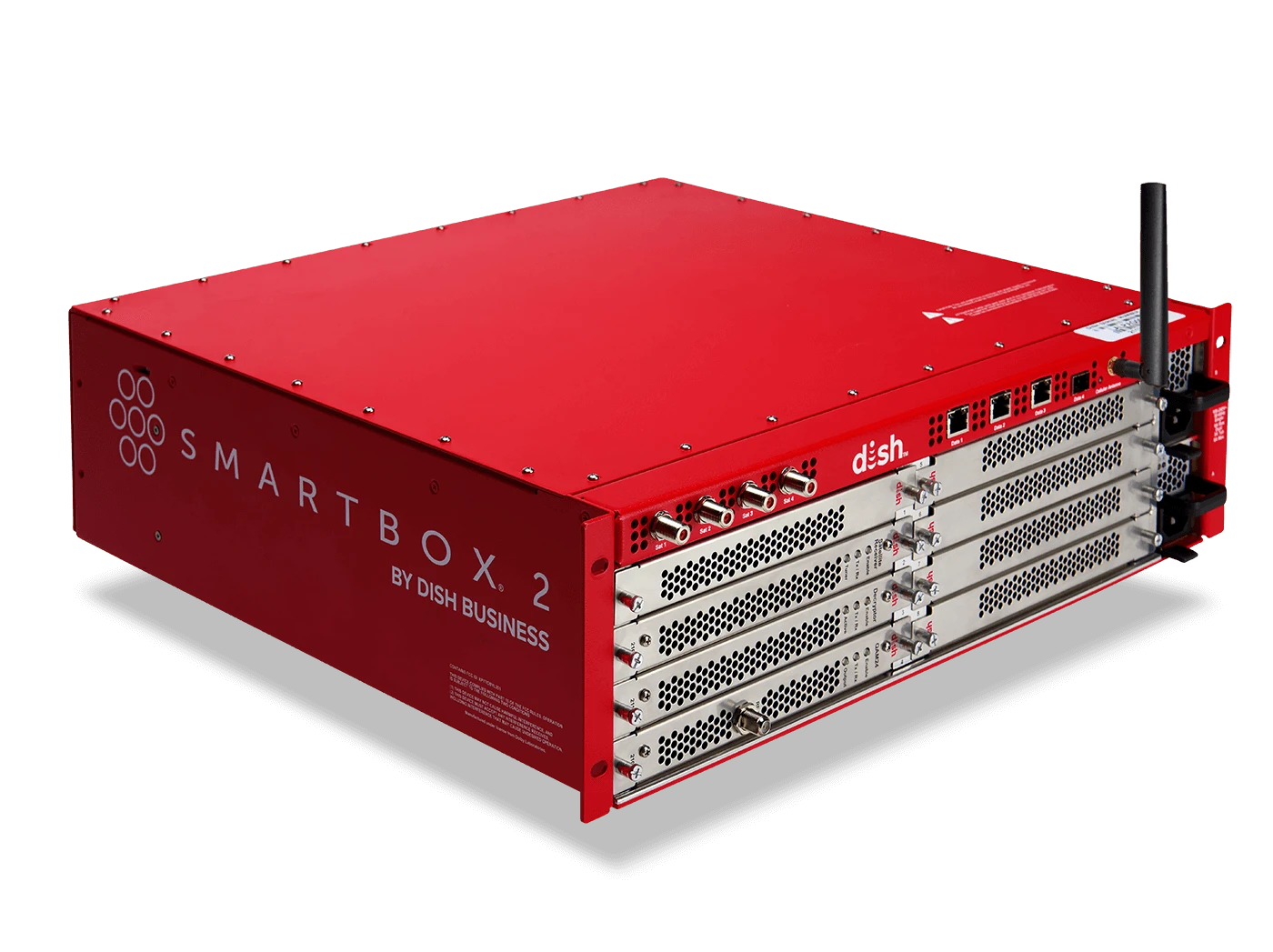
The Smartbox 2 is engineered to handle massive guest television distribution arrays, delivering ultra-high capacity multicast streaming while maintaining an exceptionally low electrical and thermal footprint.
Streaming Capacity
192 HD Channels
Up to 192 HD channels plus 4K, delivered without local hardware latency or buffering overhead.
Form Factor
3RU Rackmount
40% less space and 50% more efficient than the original SMARTBOX, with variable automated exhaust fans.
Energy Envelope
45W Typical
Maximum power efficiency to maintain optimal thermal margins under full loads.
Network Uplink
10GB SFP+ Uplink
Triple RJ45 Ethernet controllers plus a 10GB SFP+ uplink ensuring system redundancy.
Hardware Specifications
Industrial-grade engineering designed for high availability, thermal optimization, and seamless enterprise rack integration.
Physical & Mechanical
Electrical & Thermal
Network & Encryption
Smartbox 2 Headend vs. Traditional Set-Top Boxes
Compare the modern centralized headend — running over your existing wiring with no box in any room — against legacy per-room set-top box distribution.
Smartbox 2 Headend
Infrastructure Required
Existing coax or IP/LAN — no rewiring
Integrates with your existing setup — no new cable pulls or per-room boxes.
Per-Room Hardware
Zero local hardware or set-top boxes
Direct integrations with Smart TVs, saving equipment costs.
Deployment Velocity
Under 1 day per property floor
Completely software-driven cloud provisioning.
Energy Consumption
< 0.5W overhead per room
Centrally managed chassis consumes minimal aggregate power.
Upgrade Lifecycle
Cloud OTA firmware updates
Immediate capability updates without technician visits.
Traditional Set-Top Boxes
Infrastructure Required
Dedicated RG6/RG11 coaxial cable runs
High materials and routing labor costs during installation.
Per-Room Hardware
Physical set-top box behind every TV
Increased point-of-failure rate and high remote control clutter.
Deployment Velocity
3 to 7 days per property
Requires manual hardware mounting in every guestroom.
Energy Consumption
12W – 18W draw continuous per box
Generates massive thermal loads and higher utility costs.
Upgrade Lifecycle
Manual hardware swap required
Requires field dispatch and room-by-room access to change specs.
Frequently Asked Questions
Find immediate answers to key architectural, networking, and deployment questions about DISH Smartbox 2.
How does the Smartbox 2 distribute HD channels without set-top boxes?
What network requirements are needed to support 192 HD channels?
Can Smartbox 2 coexist with an existing traditional coaxial system?
Is internet connectivity mandatory for the system to function?
How does this system integrate with guest casting services like Flexizones Casting?
Where SmartBox 2 fits
The platform it powers, the alternative it competes with, and the connectivity underneath it.
Ready to upgrade to DISH Business?
Experience premium HD programming and dynamic IPTV distribution. Request a comprehensive, tailored proposal for your property in 24 hours.